Are Etsy Ads Worth It for Print-on-Demand? The Math
Are Etsy Ads worth it for print-on-demand? Work out your break-even ROAS, run a small 30-day test and know when to stop, with worked numbers for a $24.99 tee.
By the POD Made Easy team · September 24, 2026 · 11 min read

Etsy Ads are worth it for a print-on-demand listing only when each ad-driven sale costs you less than the profit it earns. For the illustrative $24.99 tee that keeps about $8.62 after costs and fees, that means a ROAS (return on ad spend) of at least 2.9 just to break even, which is a high bar for any listing that doesn’t already sell well without ads.
Below: how Etsy Ads work in 2026, your break-even numbers by product, how much you can afford per click, a 30-day test you can run on $2–3 a day, what to watch, when to stop, and how Etsy Ads differ from Offsite Ads.
Key takeaways
- Break-even ROAS = sale price ÷ profit before ads. For a $24.99 tee with $8.62 profit that’s about 2.9; at $29.99 (profit $13.14) it’s about 2.3.
- The most you can afford per click is profit × the share of clicks that buy: $0.17 for the example tee if 2% of ad clicks turn into orders.
- The minimum budget is $1 a day, new shops wait 15 days before advertising, and every listing is advertised by default when you start, so choose listings deliberately.
- Test on listings that already sell or get favorites, for 30 days, and judge each one on profit, not on ad revenue.
- Offsite Ads are a separate program: no budget, and a 12–15% fee only when an ad on another site leads to a sale.
Are Etsy Ads worth it? The short answer
For most small POD shops, Etsy Ads are worth testing carefully once you have listings that sell without them. They’re rarely worth it as a way to get a brand-new shop its first sale.
| Etsy Ads are more likely to pay off when… | They’re unlikely to pay off when… |
|---|---|
| The listing already gets organic favorites or orders | The listing has views but no favorites or sales |
| Your profit per sale is healthy ($8 or more on a tee, in our examples) | Margins are thin, as with low-priced mugs or single stickers |
| You can check results weekly and switch off losers | You’d set a budget and forget it |
| It’s peak season for the design and delivery is still possible | Your holiday shipping cut-off has already passed |
Rules of thumb for POD sellers, not Etsy guidance.
Etsy says much the same: ads work best when your listings are already getting interest from buyers, and they’re unlikely to turn a low-demand listing into a top seller.
How Etsy Ads work in 2026
Etsy Ads are pay-per-click ads inside Etsy’s own marketplace. Here’s how they work at the time of writing:
- Where to set them up: Shop Manager → Marketing → Etsy Ads.
- Budget: you set a daily budget, with a minimum of $1. Etsy never spends more than your daily budget, and charges are added to your Payment account the day after the clicks. Every seller starts with a maximum daily budget of $25, which Etsy recalculates weekly based on your recent spend.
- Waiting period: new shops must wait 15 days after opening before starting a campaign.
- Where ads show: in Etsy search, category pages and market pages, on Etsy.com and in the app, and only to buyers in countries you ship to.
- What you pay for: clicks only. Etsy bids automatically, and your cost per click varies by listing, placement and competition. Etsy says lower-quality listings may pay more per click.
- Which listings run: by default, all your current listings are advertised when you start a campaign. You can switch each one on or off, and choose whether to add new listings as you create them.
- Controls: with a daily budget of $25 or more, you can set a strategy per listing (Greater visibility, Efficient spending or Lower click cost); below that, every listing runs on Efficient spending. You can also sort listings into up to 20 ad groups and track each group’s totals.
- Attribution: an order counts as an ad order if the buyer clicked your ad and bought anything from your shop within 30 days. Those orders show a small megaphone icon on your Orders page.
$1/day
Minimum Etsy Ads budget; Etsy never spends more than the daily budget you set
Source: Etsy Help Center
15 days
Wait after opening a new shop before you can start a campaign
Source: Etsy Help Center
30 days
Window in which any purchase from your shop counts toward the ad a buyer clicked
Source: Etsy Help Center
Etsy’s article on setting up and managing an Etsy Ads campaign lists the current controls.
Your break-even ROAS, worked out
ROAS is the revenue Etsy attributes to your ads divided by what you spent on them. Etsy shows it in the Ads dashboard, but it can’t tell you whether a ROAS is good, because that depends on your margin. The formula is:
Break-even ROAS = sale price ÷ profit per sale before ads
At break-even, ads cost you exactly the profit they bring in. Here’s what that looks like for the illustrative products we use across this blog:
| Product (free shipping) | Profit before ads | Break-even ROAS | ROAS to keep half the profit |
|---|---|---|---|
| Tee at $24.99 | $8.62 | 2.9 | 5.8 |
| Tee at $29.99 | $13.14 | 2.3 | 4.6 |
| Hoodie at $44.99 | $11.27 | 4.0 | 8.0 |
| Mug (11 oz) at $19.99 | $5.14 | 3.9 | 7.8 |
Illustrative product and shipping costs with Etsy’s standard US fees at the time of writing, before any Offsite Ads fee. Use your own numbers.
Two things stand out. A higher price makes ads far easier to afford: the same tee at $29.99 breaks even at 2.3 instead of 2.9. And hoodies and mugs, despite very different prices, both need a ROAS of about 4 just to stand still, because their costs take a bigger share of the price.
Be honest about one more thing. Some ad-attributed orders would have happened anyway, because Etsy counts any purchase within 30 days of an ad click, including from shoppers who might have found you organically. A ROAS that only just clears break-even is probably losing money.
Find your profit before adsEnter your price, product cost and shipping to get the profit per sale that sets your break-even ROAS.How much can you afford per click?
ROAS is a result you only see after sales come in. Cost per click is what you can watch while a test runs. The most you can pay per click and still break even is:
Maximum cost per click = profit per sale × share of ad clicks that turn into orders
| Share of ad clicks that buy | Tee at $24.99 | Tee at $29.99 | Hoodie at $44.99 | Mug at $19.99 |
|---|---|---|---|---|
| 1% | $0.09 | $0.13 | $0.11 | $0.05 |
| 2% | $0.17 | $0.26 | $0.23 | $0.10 |
| 3% | $0.26 | $0.39 | $0.34 | $0.15 |
| 5% | $0.43 | $0.66 | $0.56 | $0.26 |
Break-even cost per click using the illustrative profits above. Pay more than this and each ad sale loses money.
Your average cost per click for a listing is its spend divided by its clicks, both shown in the Ads dashboard. If you’re paying about $0.25 a click and roughly 2% of ad clicks buy, each ad sale costs $12.50: the $24.99 tee loses money on every one, while the $29.99 version roughly breaks even. The price you charge matters more to ad profitability than any setting in the dashboard.
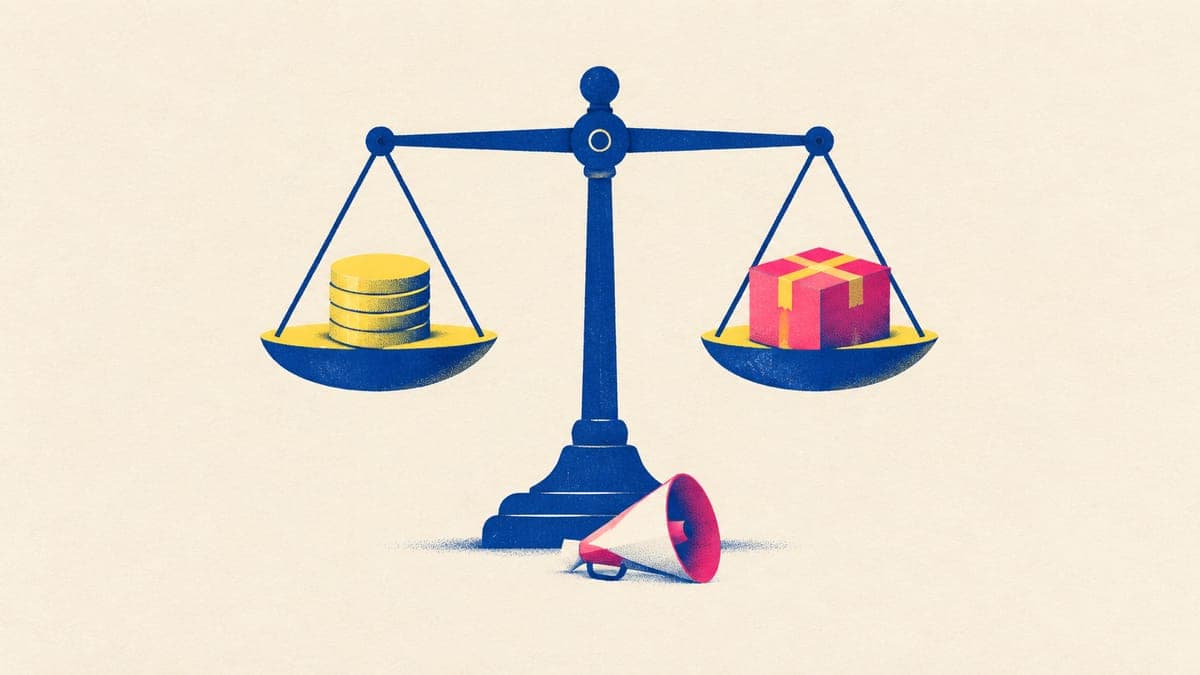
A 30-day Etsy Ads test for a small POD shop
This test keeps your risk to roughly $60–90 and gives you a clear answer in a month:
- Pick 5–10 proven listings. Choose listings with favorites or orders in the last 60 days, and switch everything else off, because Etsy advertises every listing by default when you start.
- Set $2–3 a day. That’s $60–90 over 30 days. Etsy’s minimum is $1, and Etsy says a higher budget helps ads learn what works, but only spend what you can afford to lose on an experiment.
- Put the test listings in one ad group so you can see their totals together.
- Leave the listings alone. Changing photos, prices or titles mid-test muddies the result.
- Check weekly, decide at day 30. Etsy recommends running an ad for 30 days before judging it. Weekly checks are for spotting runaway spend, not for pulling the plug on day six.
- Use a stop-loss. If a listing’s ad spend passes one sale’s profit (about $8.62 for the example tee) with no attributed order, switch it off. At that point even one sale would only get you back to zero.
| Result per listing after 30 days | What to do |
|---|---|
| ROAS at least 1.5 × your break-even | Keep it running. Raise the budget slowly, one step at a time. |
| ROAS between break-even and 1.5 × | Optional. Keep it only if you value the extra sales and reviews, and review it monthly. |
| ROAS below break-even, with some orders | Switch it off, or raise the price and test again. |
| Plenty of clicks, no orders | Switch it off. The listing has a conversion problem that ads can’t fix. |
| Very few ad views | Ads aren’t finding a match. Work on keywords and relevance instead. |
Use your own break-even ROAS from the table above.
For the listings that fail, our guide to fixing Etsy views with no sales will usually do more for them than a bigger budget.
What to watch in the Etsy Ads dashboard
- Ad views: how often your listing appeared as an ad. You aren’t charged for them. Lots of ad views and few clicks point to the thumbnail or the price.
- Clicks and click rate: click rate compares clicks with ad views. A low rate means shoppers see the ad and scroll past.
- Orders and revenue from ads: attributed for 30 days after a click, for any item in your shop.
- Spend: your total over the last 30 days, plus spend per listing for the period you select.
- ROAS: attributed revenue divided by spend. Compare it with your own break-even, not with other sellers’ numbers.
- Search terms: the phrases that led shoppers to each ad over the last 30 days. Strong ones belong in your tags; our guide to reading Etsy Stats covers the organic version of this report.
Don’t expect the Ads dashboard and your Stats page to agree: two ad clicks within 30 minutes are one visit in Stats, and ad clicks in the Etsy app are counted as app traffic there. Etsy’s guide to reviewing Etsy Ads performance defines each metric.
Etsy Ads vs Offsite Ads: what’s the difference?
They’re separate programs with very different economics:
| Etsy Ads | Offsite Ads | |
|---|---|---|
| Where ads appear | Inside Etsy: search, category and market pages | Other sites, such as Google, Facebook, Instagram and Pinterest |
| How you pay | Per click, up to your daily budget | A percentage of the order, only when an ad leads to a sale |
| Cost | Varies per click, with a $1 daily minimum budget | 15%, or 12% once your shop has made $10,000 in a 365-day period, capped at $100 per order |
| Can you opt out? | Yes. It’s opt-in, and you can pause it any time | Only while your shop has never made $10,000 in a 365-day period |
| Attribution window | 30 days after a click | 30 days after a click |
| On the example $24.99 tee | Depends on clicks per sale | A $3.75 fee at 15%, leaving about $4.87 profit |
At the time of writing.
Offsite Ads cost nothing upfront, but they take a big bite of each sale they produce, so price your listings to survive them. Our Etsy fees breakdown and guide to POD profit margins show the math. Etsy Ads, by contrast, are entirely your choice.
When to stop Etsy Ads, or never start
- Thin-margin products. A $19.99 mug that keeps about $5.14 can’t absorb much ad cost. Advertise higher-margin listings, or raise the price first; our guide to pricing print-on-demand products shows how.
- Brand-new listings. Without organic signals, you’re paying to find out whether a design works. Let search test it for free first.
- After your holiday cut-off. Once the last safe order date for Christmas delivery has passed, pause ads on holiday listings, because shoppers who need a gift by the 25th are unlikely to become happy customers. Our Etsy Black Friday playbook has the 2026 dates.
- When you can’t check weekly. Ads left on autopilot are how small budgets quietly become large ones.
Spend on listings that last, not just clicks
Every well-targeted listing is another free way into Etsy search. POD Made Easy turns each niche idea into a print-ready design with a buyer-first title and 13 tags, with drafts from about a cent at Low effort, so your budget builds listings that keep working after an ad stops.
Start your free trialCheaper ways to get the same visibility
- Improve the first photo. A better thumbnail lifts click rate everywhere, in organic search and ads alike. Our Etsy mockup checklist shows what works.
- Pinterest and your own social channels. Traffic you send yourself qualifies for Share & Save, which credits back 4% of eligible orders instead of charging you. Our Pinterest plan for Etsy sellers keeps it to a small weekly routine.
- Targeted offers. Etsy can email a discount to shoppers who favorited an item or left it in their cart. You only give up margin when someone buys.
- More listings for proven buyers. When a design sells, a spin-off for the same audience often does more than an ad budget. Our 30-day first-sale plan shows how to build a focused catalog.
Frequently asked questions
- How much should I spend on Etsy Ads as a beginner?
- Start small. Etsy’s minimum is $1 a day, and a test of $2–3 a day for 30 days on a few proven listings keeps your risk to about $60–90. Wait until listings have organic favorites or sales; new shops can’t advertise for their first 15 days anyway.
- What is a good ROAS on Etsy Ads?
- It depends on your margin. Divide your sale price by your profit before ads to get your break-even ROAS, about 2.9 for a $24.99 tee that keeps $8.62. A good ROAS is comfortably above your own break-even, not a number another seller quotes.
- Do Etsy Ads improve organic ranking?
- Etsy doesn’t say that they do. Ads buy extra visibility while they run, and the sales they bring are real sales, but don’t count on ads to lift a listing’s organic placement after you switch them off.
- Why is Etsy spending my whole ad budget without any sales?
- Etsy spends up to your daily budget on clicks, whether or not they buy. Clicks without orders usually point to the listing itself (photo, price, shipping or relevance), so switch off listings whose spend passes one sale’s profit without an order, and fix them first.
- Can I choose keywords or set bids for Etsy Ads?
- No. Etsy chooses where to show your ads and bids automatically. You control the daily budget and which listings are advertised, and with a budget of $25 a day or more you can pick a strategy per listing: Greater visibility, Efficient spending or Lower click cost.
Keep reading
More business guides
Business
Best Print-on-Demand Tools in 2026: Design, SEO, Mockups
The best print-on-demand tools in 2026, sorted by job: design, keyword research, mockups, trademark checks and publishing, plus $0, $25 and $75 tool stacks.
Sep 24, 2026 · 10 min read
Business
How Much Can You Make With Print-on-Demand? Honest Math
How much can you make with print-on-demand? Per-sale profit for tees, hoodies, mugs and stickers after Etsy fees and ads, and what $500 a month really takes.
Sep 24, 2026 · 11 min read

Business
How to Price Print-on-Demand Products (Formula + Tables)
How to price print-on-demand products on Etsy: a formula with every fee, price tables for tees, hoodies, mugs and posters, size upcharges and discount math.
Sep 24, 2026 · 11 min read