How to Start Print-on-Demand on Etsy (2026 Step-by-Step)
How to start print-on-demand on Etsy in 2026: pick a niche, choose a provider, make print-ready files, price for profit and write listings that get found.
By the POD Made Easy team · September 24, 2026 · 9 min read
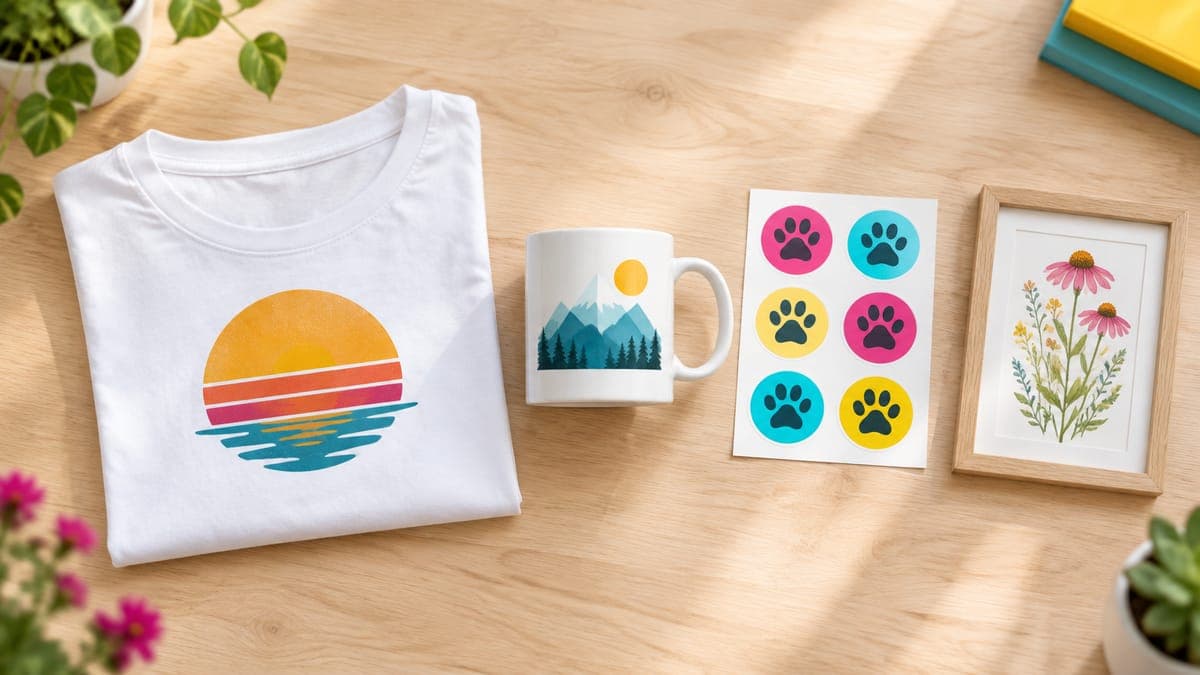
Print-on-demand (POD) lets you sell t-shirts, mugs, stickers and posters without buying stock, packing orders or touching a printer. You create the design and the listing; a print provider like Printify or Printful makes and ships each item when an order comes in. Etsy is where most POD sellers start, because buyers there actively search for personalized and niche designs.
To start, you pick a niche, connect a print provider to a new Etsy shop, make print-ready designs, price them from your costs up and write listings buyers can find. This guide walks through those steps in the order that actually matters, with real numbers. It’s written for people building a side hustle around a day job: you don’t need to be a designer, and five to ten hours a week is enough to get your first products live within a week or two and avoid the mistakes that sink many new shops.
Key takeaways
- Pick a narrow niche with clear buyers before you design anything.
- Printify is usually cheapest to start; Printful wins on consistency and branding.
- Print-ready means the right pixel size, a clean transparent background and correctly spelled text.
- Price from your costs up: product + shipping + Etsy fees + profit, not from competitors down.
- Etsy requires you to disclose your production partner and any AI use in the listing.
How print-on-demand on Etsy works
The moving parts are simpler than they look:
- You create a design and a product (for example a Bella+Canvas 3001 tee) in your POD provider.
- The provider publishes the listing to your Etsy shop, including mockups, variants and prices.
- A customer buys. The order flows to your provider automatically.
- The provider charges you the product and shipping cost, prints the item and ships it.
- Etsy pays you the sale price minus its fees. The difference is your profit.
$0.20
Etsy listing fee per item (renews every 4 months or on sale)
Source: Etsy fee policy
6.5%
Etsy transaction fee on item price + shipping
Source: Etsy fee policy
~3% + $0.25
Payment processing in the US (varies by country)
Source: Etsy Payments
How much time and money do you need?
Less money than most side hustles, and more time than the hype videos suggest. Here’s what it costs to get going at the time of writing:
| Cost | Amount | Notes |
|---|---|---|
| POD provider account | $0 | Printify, Printful and Gelato all have free plans; you pay per order |
| Etsy shop | $0, or a one-time setup fee | Etsy charges some new sellers a one-time fee (the amount varies, often about US$15) |
| Listings | $0.20 each | 25 listings cost $5; each one renews for $0.20 when it sells |
| Samples (optional) | Product + shipping | About $14 for the example tee below; order one of each product you push |
| Design tools (optional) | $0 and up | Free tools work; paid design or AI tools mostly buy back time |
At the time of writing. Check Etsy’s Fees & Payments Policy and your provider’s pricing page for current numbers.
Time is the real investment. A workable rhythm on about five hours a week is one hour of research, two to three hours on designs and files, and an hour or two on listings and your stats. That’s enough for three to five good listings a week, or 30 to 50 in your first 10 to 12 weeks. Our 5-hour-a-week side hustle plan breaks it down week by week.
Step 1: Pick a niche with buyers, not just an idea
The biggest predictor of early sales isn’t design skill; it’s choosing who you’re designing for. “Funny shirts” is not a niche. “Gifts for labor and delivery nurses” is. A good POD niche has three things:
- An identity people are proud of: jobs (nurses, teachers, electricians), hobbies (fishing, birding, crochet), pets and breeds, places, life stages (new dad, retirement).
- Gift-giving occasions: birthdays, graduations, Mother’s and Father’s Day, Christmas and industry weeks (Nurses Week, Teacher Appreciation Week).
- Room to be specific: “Golden retriever mom” beats “dog mom”, which is saturated.
A quick way to validate: type your niche into Etsy’s search bar and note the autocomplete suggestions, which reflect what buyers actually type. Then look at the first page of results. If you see listings with hundreds of reviews and the designs are strong, go narrower. For 50 starting points and a fuller validation method, see our guide to finding print-on-demand niches.
Try this idea in POD Made Easy
“Vintage badge for proud golden retriever moms, sunset and paw prints” · text: “Golden Retriever Mom”
Step 2: Choose your print provider
You don’t need to decide forever; many sellers use two providers. But start with one to keep things simple.
| Printify | Printful | Gelato | |
|---|---|---|---|
| Model | Marketplace of many print partners | Own facilities | Local production in 32 countries |
| Typical tee base cost | Low (partner-dependent) | Higher | Mid |
| Paid plan | Premium: up to 20% off products | Growth: discounts & extras | Gelato+: discounts |
| Etsy integration | Yes, publishes listings & routes orders | Yes | Yes |
| Best for | Keeping costs low, huge catalog | Consistent quality & branding | Fast international delivery |
Pricing and plans change often. Check each provider’s current catalog before you set prices.
If you’re unsure, start with Printify: its catalog is the largest, costs are usually the lowest, and you can pick a specific print partner per product based on price, speed and reviews. If you’re in the UK or most of your buyers are in Europe, compare Gelato’s local production too. Our Printify vs Printful vs Gelato comparison covers costs, quality and shipping in detail.
Step 3: Open your Etsy shop and connect it
Set up your Etsy shop (name, banner, about section and policies), then connect it inside your provider:
- In Printify, go to Manage stores and add Etsy. Authorize the connection.
- On Etsy, add your provider as a production partner (Shop Manager → Settings → Production partners). Etsy requires this for items produced by someone else; here’s how to add an Etsy production partner step by step.
- Create a shipping profile that matches your provider’s processing and delivery times.
Step 4: Make designs that are genuinely print-ready
Many one-star POD reviews trace back to three file problems: blurry prints, halos around the design, and typos. Before you publish anything, check:
- Resolution. Aim for 300 DPI at the printed size. A standard tee front print area is about 15 × 18 inches, which is 4500 × 5400 pixels (our t-shirt design size guide has the numbers for other products).
- Transparency. Apparel designs need a clean transparent background. Semi-transparent pixels around the edges can print as a faint box or halo on DTG printers.
- Text. Proofread letter by letter. AI image tools are much better at text than they used to be, but they still misspell words, especially in longer phrases.
You don’t need design training. You can design in Canva, Kittl or Illustrator, or generate drafts with AI and then produce a clean final; our AI t-shirt design workflow shows the steps. Vector files (SVG) are ideal for text and flat illustrations because they stay sharp at any size.
Step 5: Price for profit, not for the race to the bottom
Work out your price from your costs up. Here’s an illustrative example for a basic tee with free shipping:
| Line | Amount |
|---|---|
| Sale price (free shipping) | $24.99 |
| Product cost (basic tee, typical Printify partner) | −$8.80 |
| Shipping to a US customer (first item) | −$4.75 |
| Etsy listing fee | −$0.20 |
| Etsy transaction fee (6.5%) | −$1.62 |
| Payment processing (3% + $0.25) | −$1.00 |
| Profit per sale | ≈ $8.62 |
Example only. Costs vary by product, provider and destination, and Offsite Ads (12–15%) apply when a sale comes from an Etsy ad.
Two tips: price sizes 2XL and up higher, because they cost more to produce, and don’t compete on price with sellers who can’t afford to. Buyers on Etsy pay for relevance and quality. For every fee, including Offsite Ads and the ones UK sellers pay, see Etsy fees explained.
Etsy fee & profit calculatorPlug in your product cost and price to see your real profit after every fee.Step 6: Write listings that get found
Etsy search looks at your title, tags, attributes and how buyers respond to your listing. Keep it simple:
- Title: short and clear. Etsy’s 2025 guidance favors titles under about 15 words that say what the item is and the main phrase a buyer would search (“Golden Retriever Mom Shirt, Retro Dog Lover Tee”). Move gift and occasion phrases into your tags, and don’t repeat the same words.
- Tags: use all 13, each up to 20 characters. Use multi-word phrases (“dog mom gift”) rather than single words, and cover different angles: who, occasion, style, product.
- Description: write for the buyer. Who is it for, what occasion, what makes the design special. Add sizing and care info your provider supplies.
Before you publish, paste your title and tags into our free Etsy title and tag checker to catch tags over 20 characters and repeated words. When you’re ready to go deeper, our complete Etsy SEO guide covers attributes, photos and everything else that affects ranking.
Step 7: Use mockups that sell
Your first photo does most of the selling. Use a clean, bright mockup that shows the design large enough to read at thumbnail size, then add a lifestyle photo and a size chart. Your provider generates basic mockups automatically; replace the first image with your strongest one.
Step 8: Publish consistently and learn
Early on, consistency beats perfection. On five to ten hours a week, three to five quality listings a week in one niche is a realistic target for the first two to three months. Watch which listings get views and favorites, then make variations of the winners (new colors, new occasions, related sub-niches). Our 30-day plan for your first Etsy sale maps out that first month.
Do steps 4 to 6 in minutes, not evenings
Describe your idea and the words to print. POD Made Easy returns a print-ready file with spell-checked text, writes your title, 13 tags and description (with Etsy’s AI and production-partner wording), and creates the product in your own Printify or Gelato shop, ready for Etsy.
Start your free trialMistakes that sink new POD shops
- Using trademarks. Brand names, sports teams, film characters and song lyrics lead to takedowns and shop suspensions. Search the trademark database before using a phrase; our guide to avoiding trademark infringement shows how in five minutes.
- Skipping disclosures. Name your production partner and disclose AI use in your description.
- Low-resolution files. A design that looks fine on screen can print soft and blurry.
- Underpricing. After fees and shipping, a $14.99 shirt often makes almost nothing.
- Giving up too early. A shop with a handful of listings gives Etsy search very little to show. Give a niche 30 to 50 listings and a couple of months before you judge it.
Frequently asked questions
- How much does it cost to start print-on-demand on Etsy?
- Very little. Printify, Printful and Gelato have free plans and only charge you when an order comes in. Etsy charges $0.20 per listing (50 listings cost $10), some new sellers pay a one-time shop setup fee, and a few samples are the main optional cost.
- Do I need to order samples?
- It isn’t required, but ordering one sample of each product type you sell is the best way to check print quality, colors and sizing before customers do. Some providers offer sample discounts, so check before you order.
- Is print-on-demand allowed on Etsy?
- Yes. Under Etsy’s Creativity Standards, items you design and have produced by a partner are allowed as “designed by” items, as long as you add your production partner and, if you used AI tools, say so in the description.
- How long until I make my first sale?
- It varies widely, from days to months, and nothing is certain. Publishing consistently in one focused niche with specific, long-tail keywords gives you the best odds, so treat your first 90 days as research rather than a verdict.
Keep reading
More getting started guides
Getting started
Is Print-on-Demand Worth It in 2026? An Honest Answer
Is print on demand worth it in 2026? An honest verdict with real per-sale margins, what your hours are worth, the saturation question and a yes/no checklist.
Sep 24, 2026 · 9 min read

Getting started
How to Start Print-on-Demand With (Almost) No Money
How to start print on demand with no money: every real cost itemized, $0, $50 and $150 starter budgets, free tools safe for selling, and what not to skimp on.
Sep 24, 2026 · 9 min read
Getting started
17 Print-on-Demand Mistakes That Sink New Shops (and Fixes)
17 print on demand mistakes that sink new shops, grouped by stage: niche, design, print files, listings, pricing, operations and legal, each with a clear fix.
Sep 24, 2026 · 11 min read