Is Print-on-Demand Worth It in 2026? An Honest Answer
Is print on demand worth it in 2026? An honest verdict with real per-sale margins, what your hours are worth, the saturation question and a yes/no checklist.
By the POD Made Easy team · September 24, 2026 · 9 min read
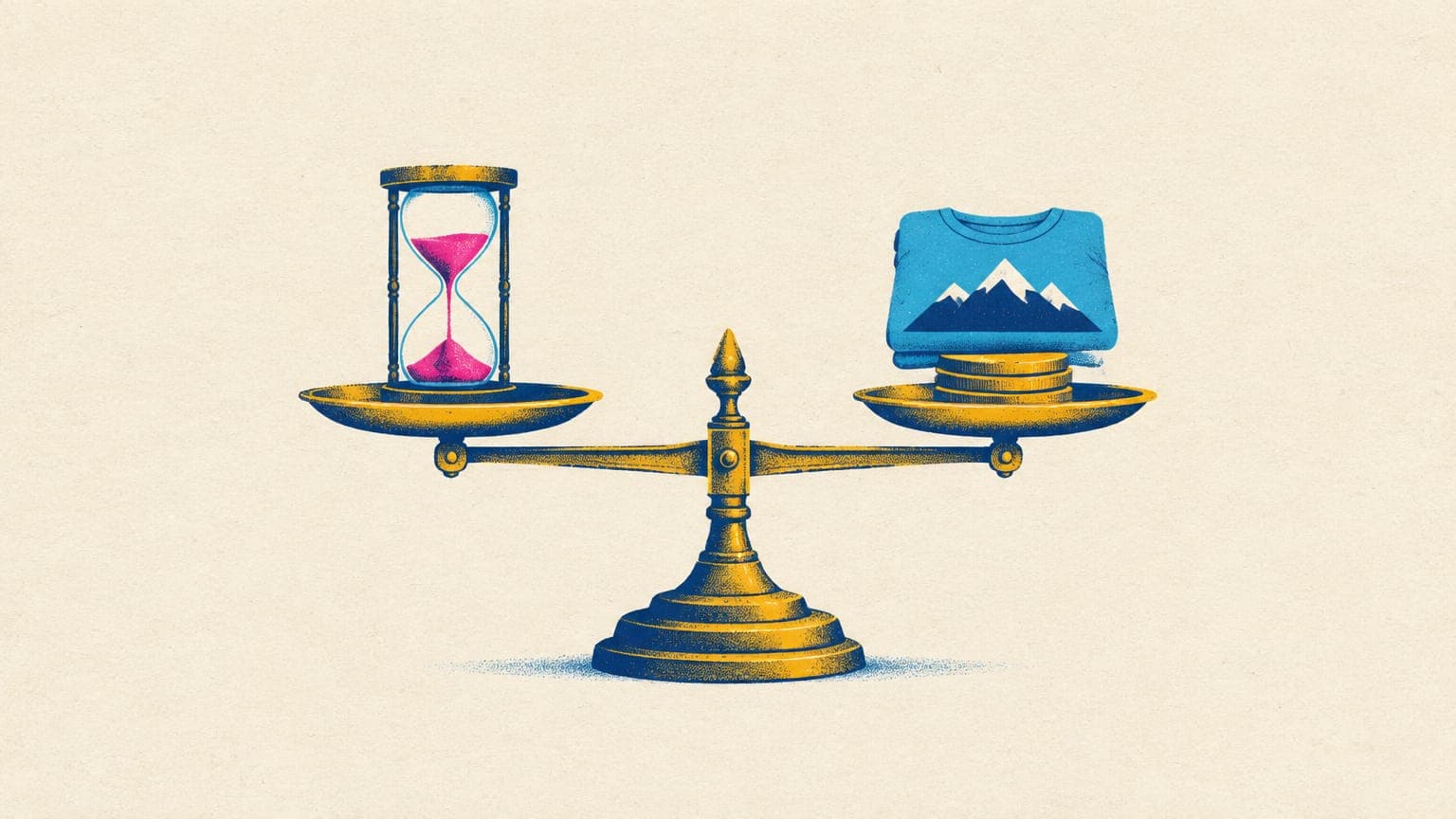
Print-on-demand is worth it in 2026 if you treat it as a small business you build over a few months, and it isn’t worth it if you need money fast. On typical numbers, a $24.99 t-shirt sold on Etsy leaves about $8.60 after the product, shipping and fees, so the real question is whether you can build enough good listings, in a niche with real buyers, to sell dozens of items a month.
Here’s the honest math behind that answer: what one sale is worth, what your hours are worth at different sales levels, how long a first sale usually takes, whether print-on-demand is saturated, what changed in 2025–26, and a yes/no checklist to help you decide. New to the model? Start with what print-on-demand is and how it works.
Key takeaways
- Worth it if you can give it 5+ hours a week for at least three months and enjoy research and ideas.
- An illustrative $24.99 tee earns about $8.62 after costs and Etsy fees, or $4.87 if the sale came from a 15% Offsite Ad.
- At 5 hours a week, 10 sales a month works out to about $4 an hour; 60 sales to about $24 an hour, before tools and tax.
- Generic designs are saturated; specific niches with clear buyers usually aren’t.
- 2025–26 made design faster and cheaper (AI is allowed with disclosure), but not the rest of the work.
The short verdict: who it’s worth it for
| It’s likely worth it if… | It’s likely not worth it if… |
|---|---|
| You can commit 5–10 hours a week for three to six months | You need income within weeks |
| You enjoy hobbies, communities, words and ideas | You want something that runs without you from day one |
| You’re fine with $5–$13 profit per sale and building volume | You expect $20 profit on every $25 item |
| You’ll learn basic Etsy SEO and read your stats | You’d rather not deal with customers or policies |
| You can spend $50–$150 over the first months | You can’t cover a few orders before payouts arrive |
Our rule of thumb, not a prediction.
Most of the right-hand column is about expectations, not ability. If you expect a slow build, the numbers below will make sense. If you expect a fast one, the same numbers will feel like failure.
What one sale is really worth in 2026
Is print-on-demand still profitable? Per sale, yes, as long as you price for it. Start with a single sale, because every goal is built from it. Here’s a basic tee sold on Etsy to a US buyer with free shipping, using illustrative costs of $8.80 for the shirt and $4.75 for shipping:
$8.62
Profit on a $24.99 tee after product, shipping and Etsy’s standard fees
Source: Etsy fee policy; example costs
$4.87
The same sale if it came from a 15% Offsite Ad
Source: Etsy Offsite Ads policy
$13.14
Profit on the same tee priced at $29.99
Source: Illustrative example
Price is the biggest lever you have. With the same $13.55 of product and shipping, the tee earns $4.09 at $19.99 and $13.14 at $29.99. Specific designs are what let you charge the higher price, because buyers pay for something that feels made for them. Every fee is broken down in Etsy fees explained, and hoodies, mugs and stickers are covered in our print-on-demand profit margins guide.
What your hours are worth
A fairer way to judge a side business is profit per hour. Say you put in 5 hours a week (about 22 hours a month) and average $8.62 profit per sale:
| Sales per month | Profit per month | Per hour (22 hours) |
|---|---|---|
| 10 | $86 | ≈ $3.90 |
| 30 | $259 | ≈ $11.75 |
| 60 | $517 | ≈ $23.50 |
| 100 | $862 | ≈ $39 |
Illustrative: before tools, samples, ads, refunds and tax. Sales depend on niche, listings and time, so treat this as math, not a forecast.
Two things make this different from an hourly job. First, your hours aren’t tied to your sales: a listing you made in March can sell in December without new work. Second, the work is front-loaded. You do most of it before most of the sales arrive, which is why month one looks terrible on this table and month nine can look very different. Our 5-hour-a-week side hustle plan shows how to spend those hours.
How long until the first sale?
Nobody can give you a reliable average, and anyone who quotes one is guessing. Some shops sell in their first week; many go weeks or months without an order. What makes the difference is mostly within your control:
- Niche specificity. Listings for a clear buyer get found and chosen faster than generic ones.
- Buyer phrases. Titles and tags that match what shoppers actually type into Etsy search.
- A first photo that reads at thumbnail size, on the product color buyers expect.
- A fair total price. Etsy’s US search has long favored free shipping, and since October 2024 it also favors US listings with domestic shipping under $6.
- Timing. Gift designs listed well before a season get more chances than ones added the week before.
- Enough listings to learn from. Treat your first 50 or so as research, not a verdict.
Is print-on-demand saturated?
Generic print-on-demand is saturated. Specific print-on-demand usually isn’t. You can see the difference by narrowing a search step by step:
| Level | Example search | What you’ll usually find |
|---|---|---|
| Broad | fishing shirt | Huge result counts, big established shops and price competition |
| Narrower | fly fishing shirt | Still crowded, but buyers have a clearer idea of what they want |
| Specific | fly fishing gift for grandpa | A clear gift buyer and fewer strong listings |
| Micro | personalized trout fishing shirt | Small demand and little competition; build several of these |
Illustrative. Check current results yourself, because demand and competition shift with the seasons.
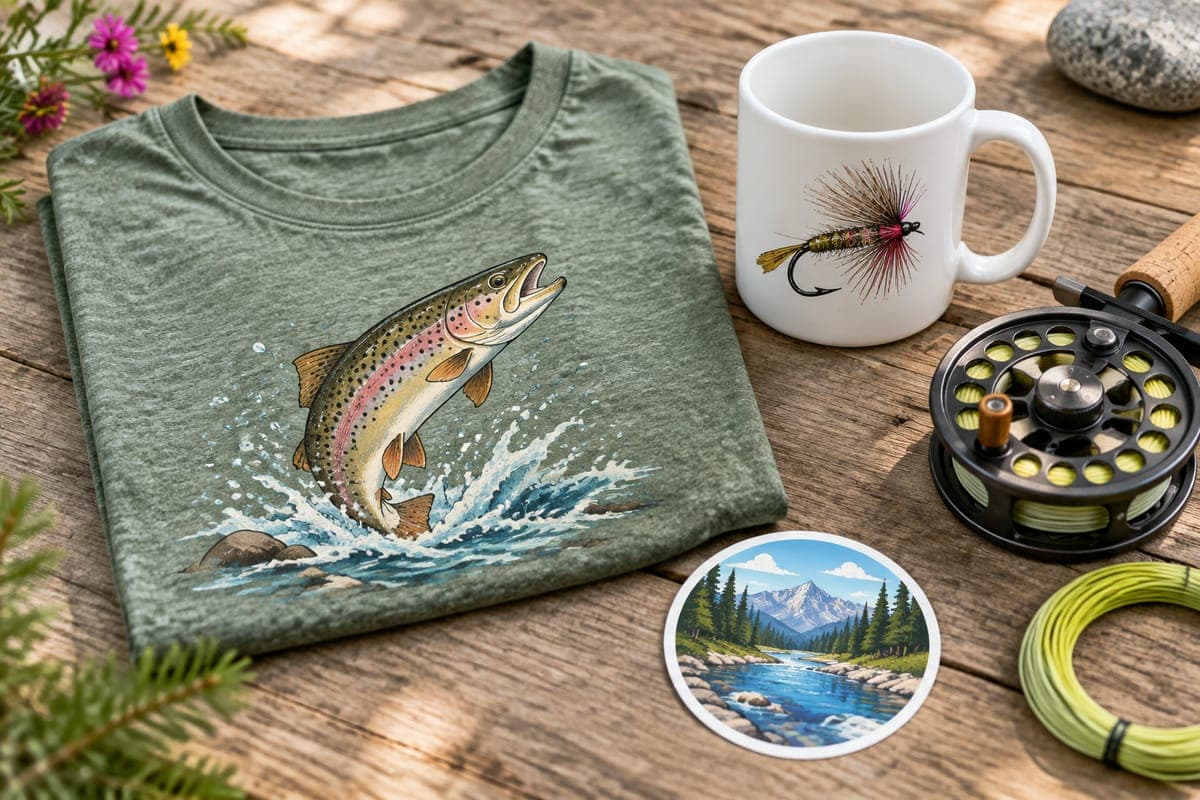
To check a niche in ten minutes, search the phrase on Etsy and study page one. If the top listings are excellent designs with hundreds of reviews, go narrower. If they’re average designs with few reviews, that’s an opening. Scroll the autocomplete suggestions for longer phrases, and treat “Bestseller” badges as proof of demand, not as something to copy. Our guides to print-on-demand niches and low-competition Etsy niches go further.
What changed in 2025–26
- AI designs are allowed, with disclosure. Etsy’s Creativity Standards, revised in June 2025, treat designs you create with AI tools from your own prompts as “designed by” you, as long as you disclose AI use in the description and name your production partner. More in selling AI designs on Etsy.
- Design got cheap; judgment didn’t. An AI draft now costs anywhere from a fraction of a cent to a few cents. Everyone has the same tools, so niche insight, wording and clean print files matter more than ever.
- AI-only art stays unprotected in the US. The Supreme Court declined to hear Thaler v. Perlmutter in March 2026, so purely AI-generated images can’t be copyrighted. Expect copycats, and build around a niche and a style rather than one design.
- Shorter titles. Etsy’s 2025 Seller Handbook guidance favors short, readable titles (consider under 15 words), with gift and occasion phrases moved into tags and attributes.
- More channels from one setup. Printify publishes to 11 sales channels, including TikTok Shop US and Amazon US, and Gelato connects to TikTok Shop, with Amazon in beta. See TikTok Shop for print-on-demand.
- Cross-border shipping got pricier. The US suspended duty-free entry for low-value parcels in August 2025, and it remains suspended at the time of writing, so printing in the buyer’s country matters more if you sell internationally.
- US tax reporting eased; taxes didn’t. The Form 1099-K threshold went back to $20,000 and 200 transactions, but you still report all your income.
Print-on-demand pros and cons at a glance
| The upside | The catch | |
|---|---|---|
| Money | Tiny upfront cost and no stock to buy | Thin margin per sale; fees and ads take a real share |
| Time | No packing and flexible hours | Research, design and listings take real time, especially early |
| Risk | An unsold design costs $0.20 | Trademark mistakes can get listings removed or a shop suspended |
| Quality | Professional printing with no equipment | You can’t inspect each item, and quality varies by partner |
| Growth | Winners can go on more products and channels | A winning idea can be copied quickly |
Find out if a niche sells in weeks, not months
POD Made Easy turns an idea into print-ready designs with spell-checked text, writes the Etsy title, 13 tags and description, and creates products in your own Printify shop at your prices. More finished listings per evening means a faster, cheaper answer.
Start your free trialA yes/no checklist before you start
Answer honestly. Each question is about work print-on-demand actually involves.
- Can I give it at least 5 hours a week for 90 days?
- Can I name one niche and the person I’m designing for?
- Will I publish 50 or more listings before judging the results?
- Can I cover $50–$150 over three months for listings, a sample and a few orders before payouts?
- Am I fine with $5–$13 profit on a typical tee sale?
- Will I proofread every design and check every print file?
- Will I search trademarks before using a phrase I didn’t invent?
- Am I comfortable answering customer messages within a day or so?
- Will I keep simple records for tax from the first sale?
- Would I keep going if month one brought no sales at all?
Seven or more yeses: it’s worth a 90-day test. Four to six: fix the no’s first; most are habits, not money. Three or fewer: park it for now and look at side work that pays by the hour.
If you try it: a low-risk 90-day test
Run your first 90 days as an experiment with a budget and an end date:
- One niche, one core product (usually a tee or sweatshirt) and one add-on such as a mug.
- 50 listings in 90 days, at about five hours a week.
- A $50–$150 budget for listing fees, a sample and a few orders before payouts arrive.
- A weekly 20-minute stats check: which listings get views and favorites, and what they share.
- A decision on day 90: scale what works, narrow the niche, or stop with a clear conscience and no more than $150 spent.
Starting with almost no money covers the budget line by line, and our list of 17 common print-on-demand mistakes shows what to avoid on the way.
Try this idea in POD Made Easy
“Retro fly-fishing badge with a trout leaping over a river at sunset, earthy greens and oranges, for a heather tee”
Frequently asked questions
- Can you make $1,000 a month with print-on-demand?
- It’s possible, but it takes volume. At an illustrative $8.62 profit per tee, $1,000 a month is about 116 sales, or roughly four a day, before tools and tax. That usually means a clear niche, many listings and several product types.
- Is print-on-demand worth it for beginners with no design skills?
- It can be. Templates, commercial-use fonts and AI tools cover much of the drawing, and Etsy allows AI-assisted designs with disclosure. What beginners need most is niche research, careful proofreading and print-ready files.
- Will AI make print-on-demand more saturated?
- It makes generic designs easier for everyone, so generic niches get more crowded. Designs for specific buyers, clever wording and consistent print quality are harder to copy, and they matter more as design gets cheaper.
- Is Etsy still worth it for print-on-demand in 2026?
- For most beginners, yes. Etsy brings buyers who search for specific and personalized items, and POD is allowed when you name a production partner. Standard fees are about 11% of a $25 order before any ads, so build them into your prices.
- How much money do I need to start print-on-demand?
- You can start with very little: $0.20 per listing and, if Etsy charges it, a one-time shop setup fee. A $50–$150 budget adds a sample and room to cover a few orders before Etsy pays you out.
Keep reading
More getting started guides
Getting started
What Is Print-on-Demand? How It Works (and Who It’s For)
What is print on demand? A plain-English guide to how POD works, who pays whom on a real $24.99 tee, providers vs marketplaces, pros, cons and first steps.
Sep 24, 2026 · 9 min read
Getting started
How to Start Print-on-Demand on Etsy (2026 Step-by-Step)
How to start print-on-demand on Etsy in 2026: pick a niche, choose a provider, make print-ready files, price for profit and write listings that get found.
Sep 24, 2026 · 9 min read
Getting started
17 Print-on-Demand Mistakes That Sink New Shops (and Fixes)
17 print on demand mistakes that sink new shops, grouped by stage: niche, design, print files, listings, pricing, operations and legal, each with a clear fix.
Sep 24, 2026 · 11 min read