Low-Competition Etsy Niches: Find Them Free (+40 POD Ideas)
Find low-competition Etsy niches for print-on-demand without paid tools: measure demand and competition, stack micro-niches and avoid the no-demand trap.
By the POD Made Easy team · September 24, 2026 · 10 min read

Low-competition Etsy niches are specific searches where buyers are clearly looking but page one serves them poorly: few listings made for that exact buyer, mostly generic designs, and small shops ranking next to big ones. You can find them without paid tools, using Etsy’s own search suggestions, a 10-minute page-one audit and your shop stats.
The catch is that low competition means nothing on its own. A search nobody makes has zero competition too. This guide shows how to measure demand and competition for free, how to stack micro-niches, 40 starting points with example searches, and how to test them without wasting listing fees.
Key takeaways
- Competition isn’t the number of results; it’s how well page one serves the exact search.
- Check demand first: search suggestions, listings with recent reviews, bestseller badges and seasonal interest.
- Stack one or two modifiers onto a niche that already sells instead of hunting for an empty one.
- Zero competition usually means zero buyers. Stop narrowing when Etsy stops suggesting the phrase.
- Test five to ten listings per micro-niche and let your search-term stats decide what to expand.
What “low competition” actually means on Etsy
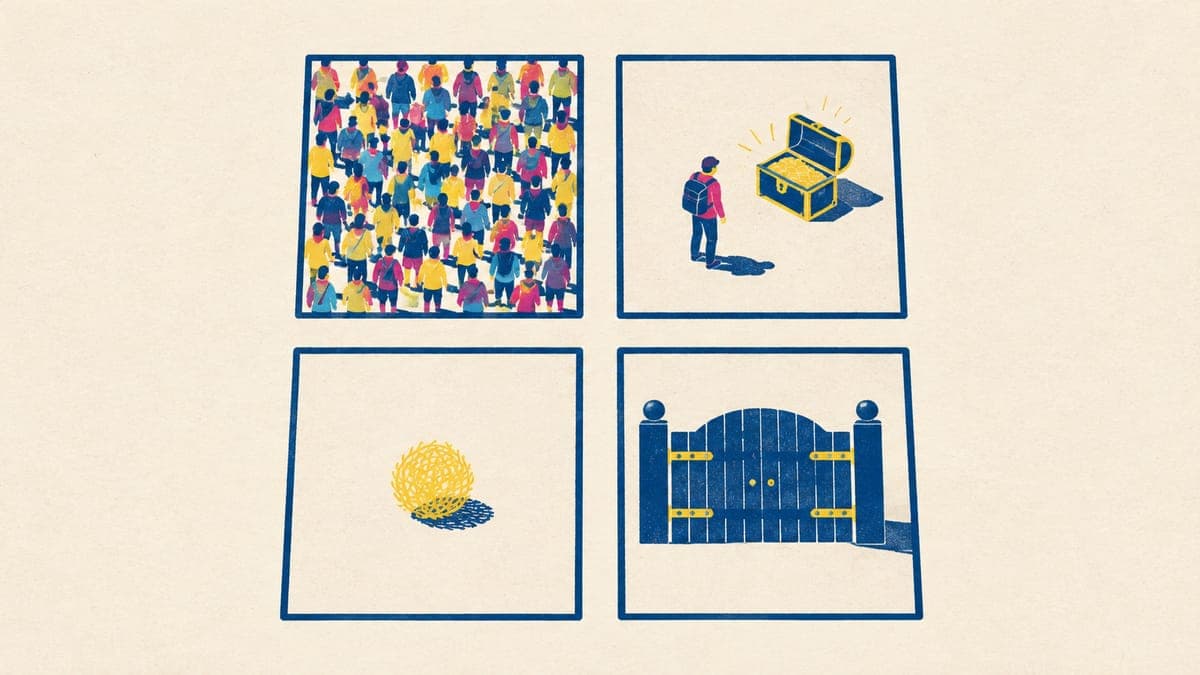
Every niche sits somewhere on two scales: how many buyers search for it, and how well the current listings serve those buyers. Only one combination is worth chasing.
| Page one serves buyers poorly | Page one serves buyers well | |
|---|---|---|
| Buyers search often | Sweet spot: test here first | Crowded: you need a sharper angle |
| Few buyers search | Trap: quiet for a reason | Skip it |
The result count at the top of a search is a poor guide. A phrase like “nurse shirt” matches an enormous number of listings, but buyers rarely look past the first page or two. If most of those listings are generic designs with the word “nurse” added, a design made for one specialty can still stand out. Etsy results can also vary between shoppers and devices, so treat any single search as a snapshot, not a verdict.
How to measure demand without paid tools
Demand comes first. Used together, these free signals tell you whether real buyers are looking:
- Etsy search suggestions. Type your root phrase slowly and note what Etsy suggests, then add a letter at a time (“nurse sweatshirt a”, “nurse sweatshirt b”) to surface longer phrases. Suggestions generally reflect what shoppers type, so a phrase Etsy suggests is one that people search. Our Etsy keyword research guide turns this into a full keyword list.
- Reviews on page-one listings. Open five or six listings made for the buyer and check how many reviews they have and how recent those are. Only some buyers leave reviews, so counts understate sales, but recent reviews show the niche is buying now.
- Bestseller badges and cart notes. When Etsy shows a bestseller badge, or a note that other shoppers have an item in their carts, that’s a live demand signal.
- Google Trends and Pinterest Trends. Google Trends shows whether interest is steady or seasonal. Pinterest Trends, free with a Pinterest business account, shows up to two years of search trends on Pinterest. Our Pinterest plan for Etsy sellers covers the account setup.
- Your own search terms. Once you have a few related listings, Etsy Stats shows the searches that brought shoppers to them, which is the most reliable demand data you’ll get. Our guide to Etsy stats shows where to find them.
How to measure competition: the 10-minute page-one audit
Once you know people search for a phrase, check how well page one serves them. Search the exact phrase a buyer would type, then score what you see:
| Question | Low competition | High competition |
|---|---|---|
| How many listings are made for this exact buyer? | A handful; most are loosely related | Most of page one |
| How original are the designs? | Generic art with the phrase added | Many distinct, well-made designs |
| Who ranks? | New and small shops appear next to big ones | Only shops with thousands of reviews |
| How good are the photos? | Basic flat mockups | Styled lifestyle photos and video |
| How are prices spread? | Varied, and some higher prices still sell | Everyone undercutting everyone |
| How many results are ads? | A few | Ads crowd the top of the page |
Our rule of thumb: three or more answers in the low-competition column, plus clear demand signals, make a phrase worth testing.
Here’s how that plays out in a hypothetical audit. Say you search “occupational therapist shirt” and page one is packed with distinct designs from established shops: crowded. Then you try “pediatric ot sweatshirt.” Suppose you find a handful of listings made for pediatric OTs, a few with recent reviews, generic OT designs filling the rest, and a couple of small shops ranking. That’s the pattern you want: proven buyers and thin tailored supply.
Micro-niche stacking: turn a crowded niche into an open one
You’ll rarely find an empty niche with real demand. You make one by adding a modifier to a niche that already sells. Each modifier narrows the buyer and makes the design feel more personal.
| Modifier | Example stack | Example search |
|---|---|---|
| Specialty or sub-role | Nurse → NICU nurse | nicu nurse sweatshirt |
| Second identity | Teacher + runner | teacher runner gift |
| Activity or setting | Dog mom + hiking | dog mom hiking shirt |
| Life stage | Nurse + retiring | retired nurse gift |
| Breed, species or variety | Chicken keeper + silkies | silkie chicken shirt |
| Style | Fishing + vintage lure art | vintage fishing lure shirt |
| Product | Book lover + tote | book lover tote bag |
Walk one ladder at a time: “dog mom shirt” (crowded) → “beagle mom shirt” → “beagle mom hiking shirt” → “retired beagle mom hiking shirt.” Stop at the last rung where Etsy still suggests the phrase, or where page one still shows a few tailored listings with reviews. One step past that, you’re usually designing for nobody. For the full identity, occasion and style formula, see our guide to print-on-demand niches.
40 low-competition starting points (with example searches)
We haven’t audited these for your market, and competition changes quickly, so treat each one as a starting point for the audit above, not a sure thing. Each comes with one example search to check first and a design angle to try. If you’re still choosing a product category, start with our guide to what sells on Etsy.
Jobs and specialties (1–10)
- Pediatric occupational therapists (“pediatric ot sweatshirt”): sensory play, fine-motor skills and therapy-room humor.
- Speech-language pathology assistants (“slpa shirt”): most designs target SLPs, not their assistants.
- Respiratory therapists (“respiratory therapist gift”): lungs, breathing and night-shift jokes.
- Veterinary receptionists (“vet receptionist shirt”): front-desk chaos with pets, rather than another vet tech design.
- School bus drivers (“school bus driver gift”): end-of-year and holiday thank-you gifts from families.
- Court reporters (“court reporter gift”): stenography humor for a small, proud profession.
- Dental hygiene students (“dental hygiene student gift”): exam, pinning and graduation milestones.
- Surgical technologists (“surgical tech shirt”): operating-room humor that isn’t aimed at nurses or surgeons.
- Home health aides (“home health aide gift”): appreciation gifts from families and agencies.
- Families of wildland firefighters (“wildland firefighter mom shirt”): pride designs for parents and partners at home, without agency insignia.
Hobby crossovers (11–20)
- Birders who keep a life list (“birding life list shirt”): specific birds and checklist humor.
- Mushroom foragers (“mushroom foraging sweatshirt”): vintage field-guide illustrations.
- Rockhounds (“rockhound gift”): geodes, agates and weekend-digging humor.
- Beekeepers (“beekeeper gift for dad”): hive and honey-harvest designs for gift buyers.
- Ham radio operators (“ham radio shirt”): radio humor, with the buyer’s call sign as an optional personalization.
- Amateur astronomers (“astronomy gift for dad”): star charts, telescopes and night-sky jokes.
- Kayak anglers (“kayak fishing shirt”): a crossover of two outdoor hobbies.
- Family history researchers (“genealogy gift”): family-tree humor and heritage designs.
- Model railroaders (“model train gift”): vintage locomotive art for gift buyers.
- Quilters with a fabric stash (“funny quilting sweatshirt”): stash and unfinished-project humor.
Pets with a twist (21–28)
Pets are full of micro-niches. Our guide to print-on-demand pet products covers the products and personalization that suit them.
- Senior dog adopters (“senior dog mom shirt”): gray muzzles and slow walks.
- Owners of three-legged pets (“tripod dog shirt”): proud, upbeat designs for three-legged dogs and cats.
- Retired racing greyhound owners (“greyhound mom sweatshirt”): couch-loving former racers.
- Deaf dog owners (“deaf dog mom”): hand-signal designs and quiet pride.
- House rabbit owners (“bunny mom sweatshirt”): indoor rabbit behavior humor.
- Bearded dragon keepers (“bearded dragon dad”): reptile humor for a devoted community.
- Silkie chicken keepers (“silkie chicken shirt”): a fluffy breed with fans of its own.
- Foster-fail cat owners (“foster fail cat shirt”): the adoption story, told with humor.
Life stages and family roles (29–35)
- Grandparents of twins (“grandma of twins shirt”): double-trouble designs with both names.
- Stepparents (“bonus mom sweatshirt”): warm, inclusive family designs.
- Empty nesters (“empty nester gift”): new-chapter humor for parents whose youngest has left home.
- First-time homeowners (“first home ornament”): year-dated keepsakes, strongest in Q4.
- Retiring teachers by subject (“retired math teacher gift”): subject jokes plus retirement.
- Adoption day families (“adoption day shirt”): matching family shirts for the big day, handled with care.
- Parents of twins (“twin mom shirt”): sleep-deprivation humor, times two.
Occasion × identity (36–40)
- Nurses Week for one unit (“nicu nurse week gift”): unit-specific designs for May 6–12.
- 100th day of school for one grade (“100 days of kindergarten teacher shirt”): a classroom milestone that often lands in February.
- Retirement for a trade (“retired electrician gift”): trade humor for the last day on the job.
- Graduation for one program (“respiratory therapy graduation gift”): pinning and graduation gifts outside nursing.
- Milestone birthdays for a hobby (“50th birthday fishing shirt”): a birthday gift that fits the recipient’s hobby.
Try this idea in POD Made Easy
“Vintage field-guide illustration of a morel mushroom beside a woven foraging basket, muted earth tones, fine linework, transparent background” · text: “Out Foraging, Back Later”
Micro-niches need many small bets
Low-competition niches reward sellers who can test several specific designs quickly. POD Made Easy drafts four designs from one idea for about a cent each at Low effort, turns the one you pick into a print-ready final with spell-checked text, and writes a buyer-first title and 13 tags for the listing.
Start your free trialThe “no demand” trap (and four other mistakes)
- Mistaking silence for opportunity. No tailored listings and no search suggestions usually means no buyers. Always pass the demand check first.
- Stacking modifiers nobody combines. A design for left-handed pickleball grandpas who bake is funny, but nobody searches for it. Two modifiers is usually the limit.
- Finding a seasonal niche too late. A Christmas micro-niche discovered on December 10 can’t be tested this year. Note it and come back in September.
- Confusing “quiet” with “available.” Some niches look empty because a brand owner removes copies. If the niche depends on a brand, franchise or famous phrase, it isn’t yours to take; our guide to print-on-demand trademarks explains the checks.
- Judging too early. Three listings and one week prove nothing. Give a batch of five to ten listings three to four weeks.
How to test a micro-niche in four weeks
| Week | What to do |
|---|---|
| 1 | Audit three phrases, then publish three designs for the best one on a single core product |
| 2 | Publish two to five more, including a variation of anything that’s getting views |
| 3 | Read your Etsy Stats: visits, favorites and the search terms that brought people in |
| 4 | Decide: expand winners to more products and nearby phrases, fix listings with views but no sales, retire the rest |
Budget matters too. Every listing costs $0.20 to publish, so ten test listings cost $2 before any sales, which is cheap tuition as long as you learn from them. Rewrite titles and tags around the search terms that actually bring visits; our guides to Etsy tags and Etsy titles that rank show how.
Etsy title & tag checkerTurn your long-tail phrases into 13 valid tags and a readable title before you publish.When a paid research tool is worth it
Tools like eRank and Everbee estimate search volume and competition, so you can shortlist ideas faster. At the time of writing, eRank runs from free to $29.99 a month and Everbee from free to $69 a month. Their numbers are estimates built from their own data, since Etsy doesn’t publish search volumes, so use them to shortlist and the page-one audit to decide.
If you publish a few listings a week, the free method in this guide is enough. If you’re researching dozens of phrases a week, a tool can save hours. Our Everbee vs eRank comparison covers which one suits POD sellers.
Low-competition niches aren’t hidden treasure. They’re ordinary buyers that most sellers haven’t bothered to design for. Pick three phrases, audit them tonight, and publish for the best one this week.
Frequently asked questions
- What sells on Etsy with low competition?
- Designs for specific buyers usually face less competition than generic ones. A sweatshirt for pediatric occupational therapists competes with far fewer listings than a generic funny shirt. Check that shoppers actually search for the phrase before you design for it.
- How many search results counts as low competition on Etsy?
- There’s no reliable number. Result counts include loosely related listings, so a search can show a huge count and still have only a handful of listings made for that exact buyer. Judge competition by what’s on page one, not by the count.
- Are micro-niches worth it if only a few people search for them?
- Often, yes, when those searches come from gift shoppers ready to buy and you can reuse the design across related phrases and products. A small niche where you reach page one can outsell a big niche where your listing is never seen.
- Can eRank or Everbee find low-competition niches for me?
- They can speed up research with estimated search volumes and competition scores, but the numbers are estimates. Use them to shortlist ideas, then confirm with a page-one audit and your own listing stats.
- How long should I test a niche before giving up?
- Give a batch of five to ten listings about three to four weeks, watching visits, favorites and search terms. Test seasonal niches a couple of months before the event, not during it.
Keep reading
More niches & trends guides
Niches & trends
Print-on-Demand Niches: 50 Ideas and How to Validate Them
How to find profitable print-on-demand niches in 2026: a simple niche formula, a free 30-minute validation check, 50 niche ideas and when to list seasonal ones.
Sep 24, 2026 · 12 min read
Niches & trends
The Best Print-on-Demand Products to Sell in 2026 (Ranked)
The best print-on-demand products to sell in 2026, scored on margin, shipping cost, gift demand and production risk, with example profits and a starter plan.
Sep 24, 2026 · 10 min read

Niches & trends
Print-on-Demand Wall Art: Posters and Canvas That Sell
Print-on-demand wall art on Etsy: posters, canvas and framed prints compared, real costs and margins, the best providers, sizes, styles and licensing traps.
Sep 24, 2026 · 9 min read