DTG vs DTF Printing: Differences, Pros and Cons for POD
DTG vs DTF printing for print-on-demand: how each works, feel, durability and fabrics, how Printify, Printful and Gelato use them, and how to design for both.
By the POD Made Easy team · September 24, 2026 · 9 min read
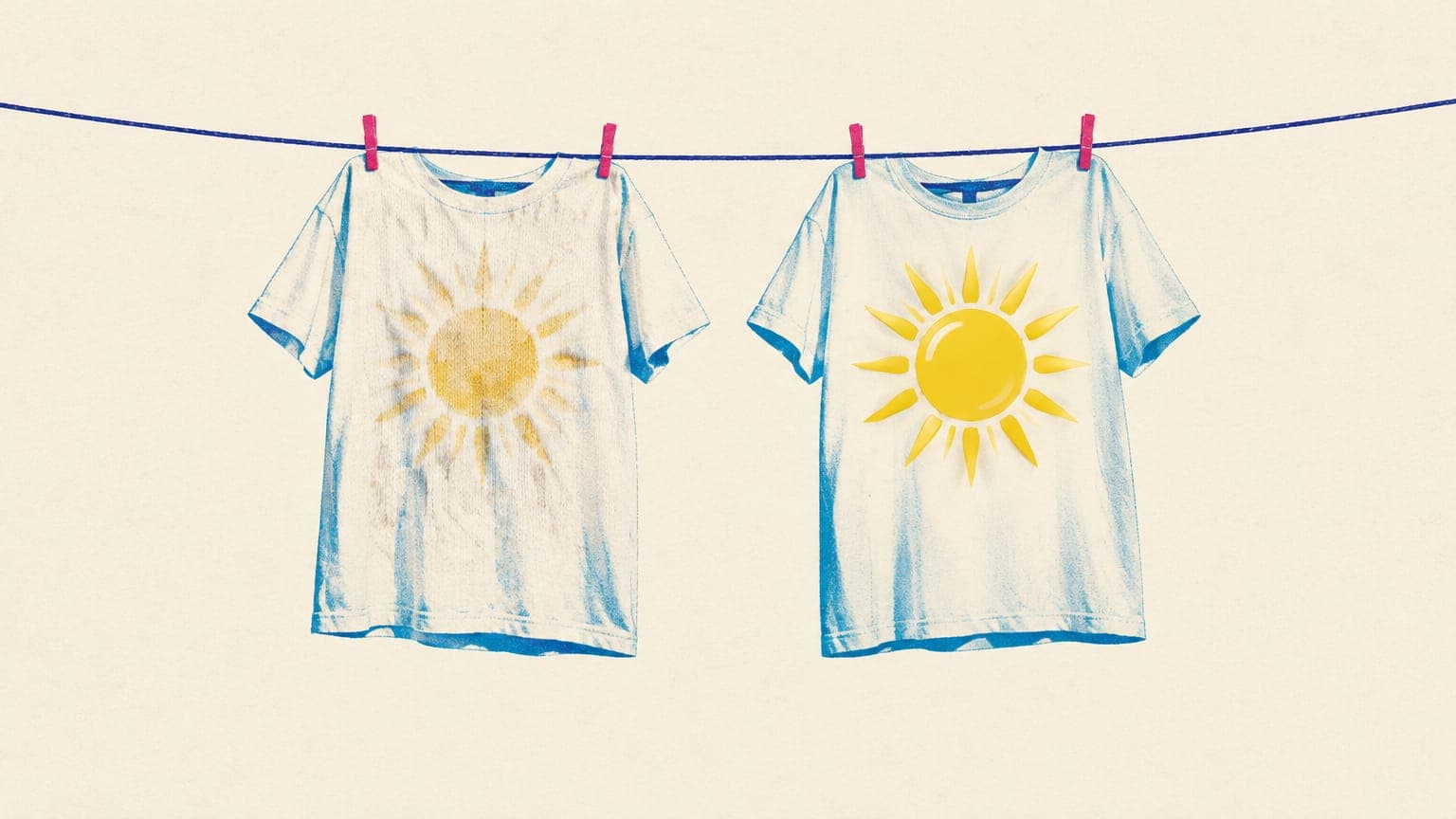
DTG vs DTF comes down to how the ink reaches the shirt. DTG (direct-to-garment) sprays water-based ink straight into the fabric, so prints feel soft, breathe well and work best on cotton. DTF (direct-to-film) prints your design onto a film and heat-presses it on, which gives bright color on almost any fabric, with a smoother, slightly stiffer feel.
For most print-on-demand sellers, the method is tied to the product and print partner you choose. So the useful questions are which method your product uses, what that means for your design file and what to tell buyers. This guide compares the two side by side, explains how Printify, Printful and Gelato label them and shows how to design files that print well either way.
Key takeaways
- DTG is soft and breathable and works best on cotton; the ink becomes part of the fabric.
- DTF gives bright color on cotton, polyester, fleece and blends; the print sits on top and can feel stiff at first.
- Both lay white ink under colors on dark garments, so semi-transparent pixels print badly with either method.
- DTF needs thicker details: Printful asks for lines of at least 1 pt, about 4 px at 300 DPI.
- Put care instructions in every listing: wash cold and inside out, and never iron the print.
How DTG printing works
Direct-to-garment printing works much like an inkjet printer for clothing. According to Printful’s description of the process, the garment is loaded flat onto a platen, sprayed with a pretreatment that helps the ink bond, printed with water-based inks and then cured with heat to set the design.
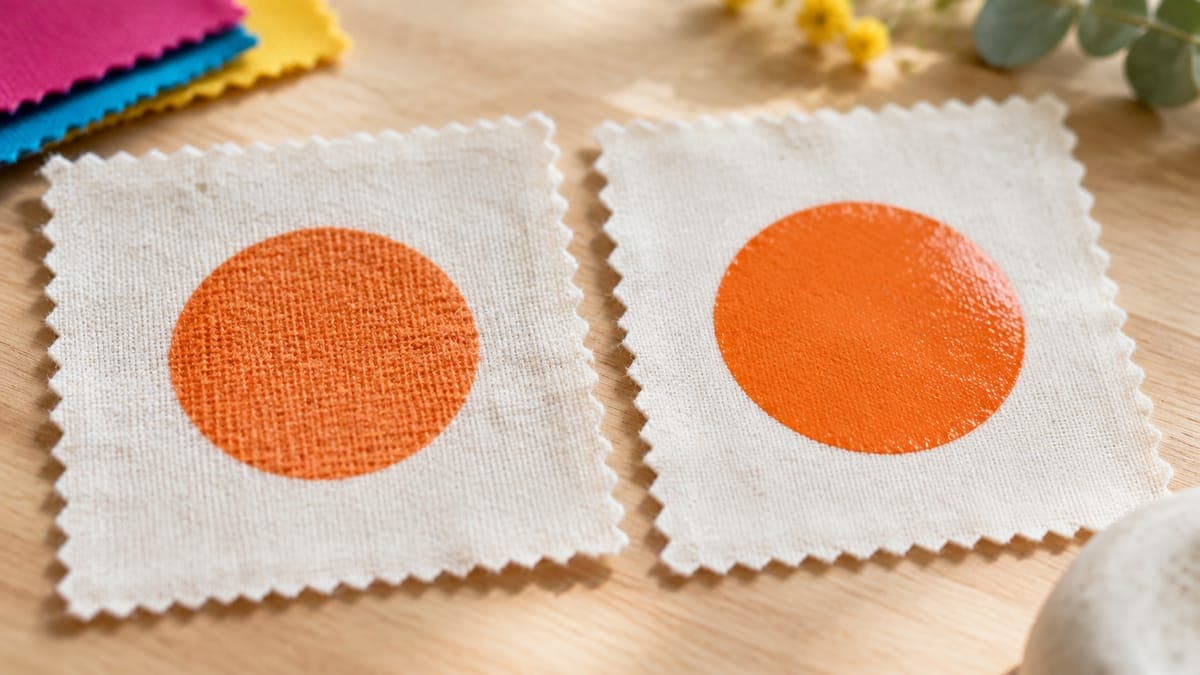
On white and light shirts, the printer lays down color only. On dark and colored shirts, it first prints a layer of white ink, called the underbase, so colors stay bright, then prints the colors on top. The ink soaks into the fibers rather than sitting on them, which is why DTG prints feel soft and breathe well. It’s also why fabric matters: 100% cotton gives the most vivid, opaque result, while cotton-poly blends and tri-blends give a softer, more washed-out look that Printful describes as vintage.
- Strengths: soft feel, breathable prints, no setup per design, and fine for detailed, multi-color and photographic artwork.
- Limits: works best on natural fibers, colors can look softer on dark garments and blends, and semi-transparent pixels print unpredictably.
How DTF printing works
Direct-to-film printing moves the printing step off the garment. The design is printed onto a special PET film, coated with an adhesive powder, then heat-pressed onto the product. Because the transfer includes a white layer, it works on almost any fabric color and keeps colors vivid. Printful sells its version as DTFlex and lists cotton, polyester, fleece, nylon and blends among the fabrics it suits.
The trade-off is feel. Printify describes DTF prints as having a textured feel, Gelato says they have a glossy finish that can feel stuck on compared with DTG, and Printful says they may feel slightly stiff at first, soften after a few washes and breathe relatively little.
- Strengths: vivid, consistent color on dark garments, sharp detail and a wide range of fabrics, including polyester and fleece.
- Limits: a smoother, heavier feel on large solid areas, lower breathability, and very thin lines or soft edges that may not stick well.
DTG vs DTF side by side
| DTG | DTF | |
|---|---|---|
| How it works | Ink sprayed directly into the fabric | Design printed on film, then heat-pressed on |
| Feel | Soft; part of the fabric | Smooth layer on top; can feel stiff at first |
| Breathability | High | Lower, especially on large solid areas |
| Color on dark shirts | Good, but softer than on white cotton | Bright and consistent |
| Best fabrics | 100% cotton and high-cotton blends | Cotton, polyester, fleece, nylon and blends |
| Fine detail and small text | Can soften into the fabric texture | Sharp, but lines under about 1 pt may peel |
| Semi-transparency and soft edges | Prints faded, speckled or grainy | Rough, blotchy edges |
| Large solid areas | Stay soft | Feel heavier; see-through areas help |
| Durability, in providers’ words | Gelato: as washable as screen printing | Printify: more durable, less prone to peeling |
| Where POD uses it | Most tees, hoodies and sweatshirts | Some tees, activewear, hats, sleeves and labels |
Summarized from Printful, Printify and Gelato help-center guidance at the time of writing (September 2026). Results vary by print partner, garment and design.
Screen printing, sublimation and embroidery in brief
You’ll see a few other methods in POD catalogs. Here’s where they fit:
- Screen printing pushes ink through a mesh screen, one screen per color. It’s economical for large runs of the same design but impractical for one-off orders, which is why it’s rare in print-on-demand. Gelato, for example, says it doesn’t offer it.
- Sublimation uses heat to turn dye into a gas that bonds with polyester or specially coated surfaces. It powers all-over print apparel and many mugs. The base must be white or light, and white can’t be printed, so white areas of your design show the fabric.
- Embroidery stitches the design in thread. It looks premium but limits colors and detail: Printful’s standard embroidery offers 15 thread colors with up to 6 per design, and very small text may be unreadable.
- Specialty transfers such as puff, metallic and glitter prints are available on selected Printify products. They work best with bold, simple shapes.
How Printify, Printful and Gelato label print methods
Often you don’t choose the method on its own: it comes with the product, print area and partner you pick. Here’s how each provider handles it:
- Printify calls them decoration methods, and you can filter the catalog by them. Each print partner lists the method per print area, and one product can mix them: we saw a Gildan hoodie where one US partner prints the front, back and sleeves with DTG and the inner neck label with DTF. Printify says it uses DTG for tees, hoodies, sweatshirts, joggers and totes, and DTF for some tees, activewear, caps and home decor. Our guide to choosing a Printify print provider covers what else to compare.
- Printful lists techniques such as DTG printing, DTF printing (DTFlex) and embroidery on each product, and you pick one in its Design Maker. Each technique has its own print areas: on the Gildan 18500 hoodie, for example, the DTG front area reaches 14 × 14 inches on the largest sizes, while the DTF front is a wider 15 × 12 inches. Our hoodie design size guide has more of these numbers.
- Gelato uses DTG as its main apparel method and says that, in some locations, it may print the inner neck, sleeves and front with DTF for faster production. It doesn’t offer sublimation or screen printing for apparel, according to its help center.
If you’re weighing providers more broadly, our Printify vs Printful comparison covers costs and quality beyond print methods.
Design files that print well with both methods
You can’t always control the method, but you can make a file that suits both. Printful, Printify and Gelato give remarkably similar advice:
- No semi-transparent pixels. Soft shadows, glows and fades print faded or grainy on DTG and blotchy on DTF. Use solid shapes, and fake a fade with halftone dots. Our transparent PNG guide shows how to clean edges.
- Leave black transparent on black shirts. Because of the white underbase, black ink looks grayish on black fabric. Let the shirt provide the black.
- Don’t rely on white ink on white shirts. DTG printers don’t print white on white garments, so white areas simply show the shirt.
- Keep lines and text substantial. For DTFlex, Printful asks for lines of at least 1 pt (about 4 px at 300 DPI), text of roughly 10–12 pt or larger, and a background shape behind very small text to stop it peeling.
- Let large DTF designs breathe. Printful suggests adding see-through areas to big DTF designs, so less ink and adhesive goes on the garment and the print feels lighter.
- Expect tinted light inks on red. Printful and Gelato both note that white or light ink on red and maroon garments can look tinted.
- Export in sRGB. Every provider here asks for RGB files; see our guide to RGB vs CMYK for print-on-demand.
Shirt color changes the result too: heathers print softer than solid colors, and some colors hide parts of a design. Our guide to choosing t-shirt colors has a contrast table for matching designs to shirts.
Files that print cleanly with either method
POD Made Easy delivers transparent PNGs with cleaned-up edge pixels at your product’s exact print-area size, so there’s no semi-transparent haze for DTG or DTF to trip over, then creates the product in your Printify shop with the print partner you choose.
Start your free trialCare instructions to add to your listings
Hot washes and high-heat drying are hard on any print, and Printful warns that its DTF prints can develop small cracks if washed in hot water. Include care instructions in every description; our Etsy description template shows where they fit. This version follows Printful’s care guidance for DTG and DTF prints at the time of writing:
Check your own provider’s care advice and the garment’s label too, since blanks and methods vary. The “wash before first wear” line matters for DTG: pretreatment can leave a vinegar-like smell or light residue, which Printful says disappears after the first wash. If a buyer does report a faulty print, our guide to handling misprints and returns covers what providers usually replace.
Which should you choose?
| If your design or product is… | Lean toward | Why |
|---|---|---|
| A soft, everyday cotton tee or hoodie | DTG | Softest feel and best breathability |
| Bright, detailed art on a dark shirt | DTF | Vivid color over a white film layer |
| Polyester, fleece or performance fabric | DTF, or sublimation for all-over prints on white polyester | DTG works best on natural fibers |
| Big blocks of solid color | DTG | DTF feels heavier over large areas; if you use it, add see-through gaps |
| Photos or subtle gradients | Either: DTG for softness, DTF for punchier color | Printful suggests DTG for soft gradients and DTFlex for detailed, colorful art |
| Neck labels, sleeves or hats | Whatever your partner uses | Many partners use DTF for small or awkward areas |
A starting point, not a rule. Order a sample in the method you’ll actually sell.
Whichever you pick, order a sample of your best-selling design from the exact product and partner you list, wash it a few times and look at it on a real body. That tells you more about feel and durability than any comparison table, including this one.
Try this idea in POD Made Easy
“Bold retro desert sunset with mesas and saguaro silhouettes, halftone dot fade, five solid colors, no gradients or transparency, isolated on transparent background”
Frequently asked questions
- Is DTF better than DTG?
- Neither is better across the board. DTG gives a softer, more breathable print and suits cotton. DTF gives bright color on almost any fabric, including polyester and fleece, but the print sits on top and can feel stiff at first. Choose by fabric, design and the feel you want.
- Which lasts longer, DTG or DTF?
- Providers describe it differently. Printify says DTF prints are more durable and less prone to peeling, while Gelato says its DTG shirts wash as well as screen prints. Care matters as much as method: cold washes, inside out, low heat and no ironing on the print.
- Can I choose DTG or DTF on Printify?
- Sometimes. Printify calls them decoration methods; you can filter its catalog by them, and each product and print partner lists the method used for each print area. The method comes with the product and partner you pick, not with your file.
- Does DTF work on polyester?
- Yes. Printful says its DTF prints work on cotton, polyester, fleece, nylon and blends. DTG works best on natural fibers like cotton, and on blends it gives a softer, more washed-out print.
- Why does my new DTG shirt smell like vinegar?
- That’s the pretreatment that helps DTG ink bond to the fabric. Printful says the smell and any light residue disappear after the first wash, so it’s worth telling buyers to wash before first wear.
Keep reading
More design guides
Design
Can You Use Canva for Print-on-Demand? License and Workflow
Yes, if your design is original. What Canva’s license allows on print-on-demand merch, what it bans, and the export settings that give you print-ready files.
Sep 24, 2026 · 10 min read
Design
RGB or CMYK for Print-on-Demand? Color That Prints True
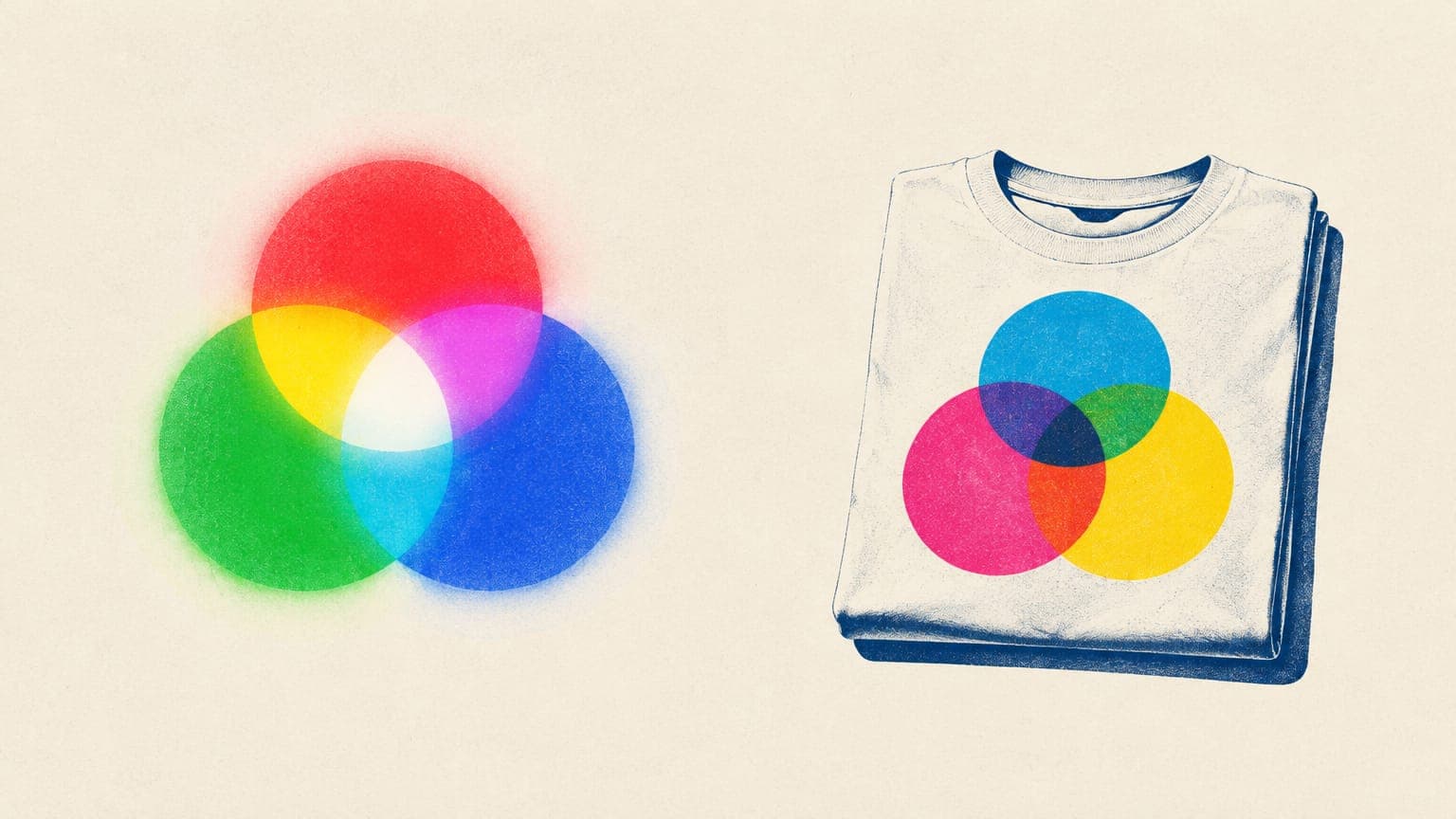
RGB or CMYK for print on demand? Printify and Printful want RGB (sRGB) files. Here’s why, why prints look different from your screen, and how to fix it.
Sep 24, 2026 · 8 min read
Design
How to Upscale an Image for Print (Without Blurry Shirts)
How to upscale an image for print: the DPI math, why changing the DPI number adds nothing, AI upscalers and their artifacts, and a workflow to 4500 × 5400 px.
Sep 24, 2026 · 8 min read